


Here Are the Most Common Mites In Your Home
| Mite Name | Visible? | Where They Hide | Bites Humans? |
| Dust Mite | ❌ No | Bedding, Carpet, Sofa | No (Allergy only) |
| Mould Mite | ✅ Yes (White Dust) | Damp Walls, Kitchens | No |
| Clover Mite | ✅ Yes (Red Dots) | Windowsills, Concrete | No (Stains Red) |
| Bird Mite | ✅ Yes (Moving Dots) | Near Nests, Roofs | Yes (Painful) |
| Scabies | ❌ No (Burrows) | Under Skin | Yes (Intense Itch) |
| Spider Mite | ✅ Yes (Webbing) | Houseplants | No |
| Demodex | ❌ No | Eyelashes, Face | No |
Most Common Mite - House Dust Mites

- Explanation: Tiny creatures thriving in bedding, carpets, and upholstery, feeding on dead skin cells.
- Visible to the Naked Eye: No, they are typically too small to be seen without magnification.
- Allergies: Many are allergic to dust mite droppings, triggering asthma and allergic reactions especially when inside and in your bed.
- Lifespan: Live about 2 to 4 months, dying from starvation or environmental changes.
-
Types of Dust Mite: There are many species of dust mites but they are very similar -
- European Dust Mite -Dermatophagoides pteronyssinus.
- American Dust Mite - Dermatophagoides farinae
- World Wide Dust Mite- Euroglyphus maynei
Dust mites the culprit? Here's how to get rid of them.
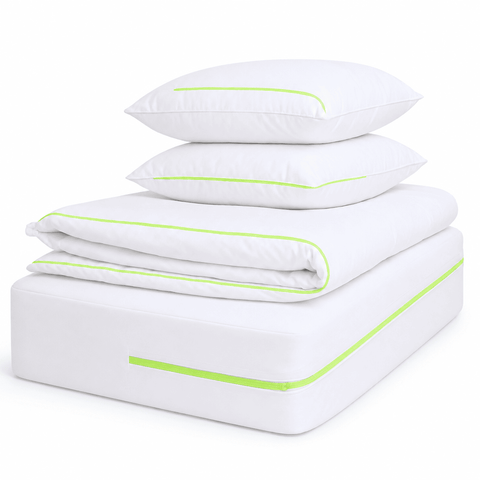
They live in your mattress and pillows. A six-sided encasement blocks 100% of dust mites at the source.
Shop the Mattress Protector → Seal the whole bed with the Set →
Read our 6 step guide in full - Breathe Better And Remove Skin Irritation
Mould Mites: Tiny White Bugs on Damp Walls

- Explanation: Mold mites, also known as "storage mites" or "mildew mites," thrive in areas with high humidity and mold growth, feeding on decomposing organic matter.
- Visible to the Naked Eye: Yes, they are small but can be seen with the naked eye, often appearing as tiny white or gray specks.
- Allergies: Can trigger allergic reactions and respiratory issues in some individuals due to mold they feed on.
- Lifespan: Live for about 2 to 4 weeks, depending on environmental conditions.
Getting Rid of Mold Mites
- Remove Mold: Clean and eliminate any mold from your home, especially in damp areas like bathrooms and kitchens.
- Control Humidity: Use dehumidifiers to keep humidity levels low, preventing mold growth that attracts mold mites.
- Regular Cleaning: Frequently vacuum and clean surfaces to reduce organic matter and dust that may harbor mold mites.
Storage Mites: Tiny White Bugs in Flour & Pantry

- Explanation: Found in stored foods like grains, can migrate to homes through contaminated food.
- Visible to the Naked Eye: Yes, they can be seen, but they are very small and may be hard to spot.
- Allergies: People can develop allergies, causing respiratory issues.
- Lifespan: Several weeks to months, depending on conditions.
Getting Rid of Storage Mites
- Seal Food: Store food in airtight containers to keep mites out.
- Clean Regularly: Clean pantry shelves and vacuum to remove dust and crumbs.
- Reduce Humidity: Keep storage areas dry and use a dehumidifier if needed.
Scabies Mites: Intense Itching & Skin Burrows
- Explanation: Burrow into the skin, causing scabies, which leads to intense itching and rash.
- Visible to the Naked Eye: No, they are not visible without a microscope.
- Allergies: Allergic reactions occur due to the body's response to the mites and their eggs.
- Lifespan: Live for about 1 to 2 months, transmitted through direct skin contact.
Getting Rid of Scabies Mites
- Treat with Medication: Use prescription creams or lotions from a doctor to kill the mites.
- Wash Bedding and Clothing: Wash all bedding, clothes, and towels in hot water to eliminate mites and eggs.
- Clean Surfaces: Vacuum and clean surfaces in your home to remove any mites that may be present.
Bird & Chicken Mites: Biting Pests from Nests
- Explanation: Parasites feeding on birds, can infest homes if birds nest nearby.
- Visible to the Naked Eye: Yes, they can be seen without magnification.
- Allergies: Can cause skin irritation and allergic reactions upon contact with humans.
- Lifespan: Live for a few weeks to several months, depending on host availability.
Getting Rid of Bird Mites
- Remove Bird Nests: Safely remove any bird nests from your property to prevent mites from entering your home.
- Clean Thoroughly: Vacuum and clean areas where birds have been, including nests and droppings, to remove mites.
- Use Insecticides: Apply appropriate insecticides designed for mites, following instructions carefully to treat infested areas.
Cheyletiella Mites: 'Walking Dandruff' on Pets
- Explanation: Known as "walking dandruff," often found on pets but can transfer to humans.
- Visible to the Naked Eye: Yes, they are relatively large for mites and can be seen moving.
- Allergies: Can cause mild skin irritation and allergic responses in sensitive individuals.
- Lifespan: Live for about 2 to 3 weeks outside a host, longer on pets.
Getting Rid of Cheyletiella Mites
- Treat Pets: Use a vet-recommended treatment, such as special shampoos or topical medications, to eliminate mites on pets.
- Wash Bedding: Wash your pet's bedding and any blankets they use in hot water to remove mites and eggs.
- Vacuum Regularly: Vacuum your home frequently to remove any mites and their eggs from carpets and furniture.




11 comments
My husband has been dealing with some tupe of insect that he says he can feel on him. We have spent nearly $ 3,ooo.oo and he still thinks there are mites in our home. He is the only one ferling anything. I need help. House has been heated uo twice.