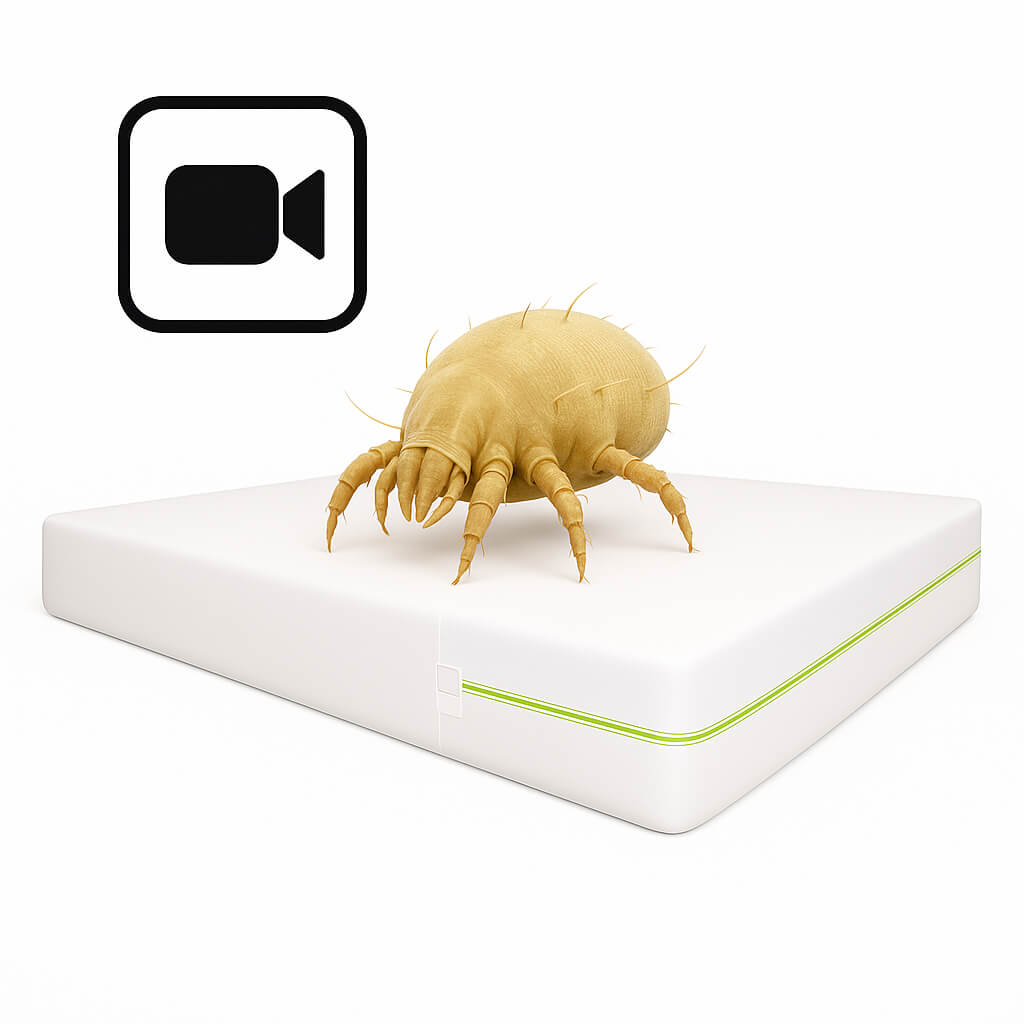
If you wake up itching, scratching or with irritated, inflamed skin, and it is worse first thing in the morning, the cause is probably in your bed right now. Not the washing powder. Not the weather. Dust mites, living in their millions inside your mattress, pillows and duvet, feeding on the skin you shed while you sleep.
This guide explains what a dust mite allergy actually is, why it flares worst at night, why the usual advice keeps failing you, and the one approach that reliably works. It is written in plain English, with no jargon and no false promises.
The Problem: An Allergy You Sleep Inside Every Night
Itchy skin is the single most common dust mite allergy symptom, reported more often than sneezing, more often than a blocked nose, more often than anything else. And because your skin is pressed against your bedding for seven or eight hours a night, the bed is where you get the heaviest, longest exposure of the entire day.
That is why so many sufferers describe the same pattern:
-
Waking up scratching, sometimes until the skin breaks
-
Puffy or swollen eyes first thing in the morning
-
A blocked or runny nose on waking that eases as the day goes on
-
Eczema that flares overnight and calms slightly during the day
-
Broken, restless sleep and daytime exhaustion you cannot explain
If your symptoms are year round rather than seasonal, and noticeably worse in the bedroom, dust mites are the likely culprit. Seasonal flare-ups point more towards pollen.
An average adult sheds up to 1.5 grams of skin a day. That is enough to feed one million dust mites.
Why It Happens: What Is Actually Triggering You
A dust mite allergy is an immune reaction to microscopic creatures that live in soft furnishings: mattresses, pillows, duvets, carpets and upholstered furniture. Here is the part most people get wrong. The mites themselves do not bite and are not the problem.
The trigger is the protein in their droppings. As Allergy UK explains, each mite produces around 20 waste droppings every single day, and those droppings keep triggering allergic reactions even after the mite that made them has died. You breathe them in and your skin rests against them all night. Your immune system treats the protein as a threat and reacts, which is what produces the itching, the swelling and the congestion.
What dust mites need to thrive
Understanding what keeps them alive is what makes them controllable. Dust mites need four things:
|
What they need
|
The detail
|
What it means for you
|
|
Humidity
|
They absorb moisture from the air to survive
|
Below 50% humidity, they gradually dry out and die
|
|
Warmth
|
They thrive at 21 to 26°C
|
A normal bedroom is ideal for them
|
|
Food
|
They eat the dead skin you shed
|
Your bed is the richest food source in the house
|
|
Shelter
|
Deep, fibrous materials
|
Mattresses, pillows and carpets are perfect hiding places
|
They are extraordinarily common. House dust mites are found in every UK home no matter how clean it is, and around one in five adults tests positive for the allergy. Almost all children with eczema test positive too, according to NHS allergy services. This is not a hygiene problem. It is a biology problem.
What Doesn't Work (and Why You're Exhausted)
If you have already tried to fix this and failed, you are not doing it wrong. Most of the common advice tackles the symptom or the surface, not the source, so the relief never lasts. Here is the honest picture.
-
Antihistamines and steroid creams. These manage the reaction after it has already happened. They do nothing to reduce the allergen you are exposed to, so the moment you stop, you are back where you started.
-
Hot washing your sheets alone. Washing at 60°C does kill dust mites in the items you wash. But it does nothing for the mites living deep inside the mattress and pillows underneath, which is where the largest population lives.
-
Vacuuming the mattress. A standard vacuum lifts a little surface dust but leaves the mites embedded in the fibres, and often blows the finest allergen particles straight back into the air you breathe.
-
Cheap "anti-allergy" protectors. Many are simply not woven tightly enough to stop microscopic allergen particles. Callers routinely tell us a budget cover was "no better than the really cheap one I bought."
-
Sprays on their own. A spray can give short-term surface relief, but it cannot seal the mites away, so they keep breeding and the problem returns.
The pattern is always the same. Each of these does part of a job, none of them removes your exposure, and so you end up doing all of them forever and still waking up itching. The endless washing and hoovering is exhausting, and it is not your fault that it has not worked.
What Actually Works: Seal the Bed at the Source
There is no single trick that removes a dust mite allergy, and anyone claiming a magic pill is not being straight with you. But there is a clear order of actions that works, and the NHS and Allergy UK agree on the foundation: reduce your exposure at the source, starting with the bed.
1. Seal the mattress, pillows and duvet (the non-negotiable first step)
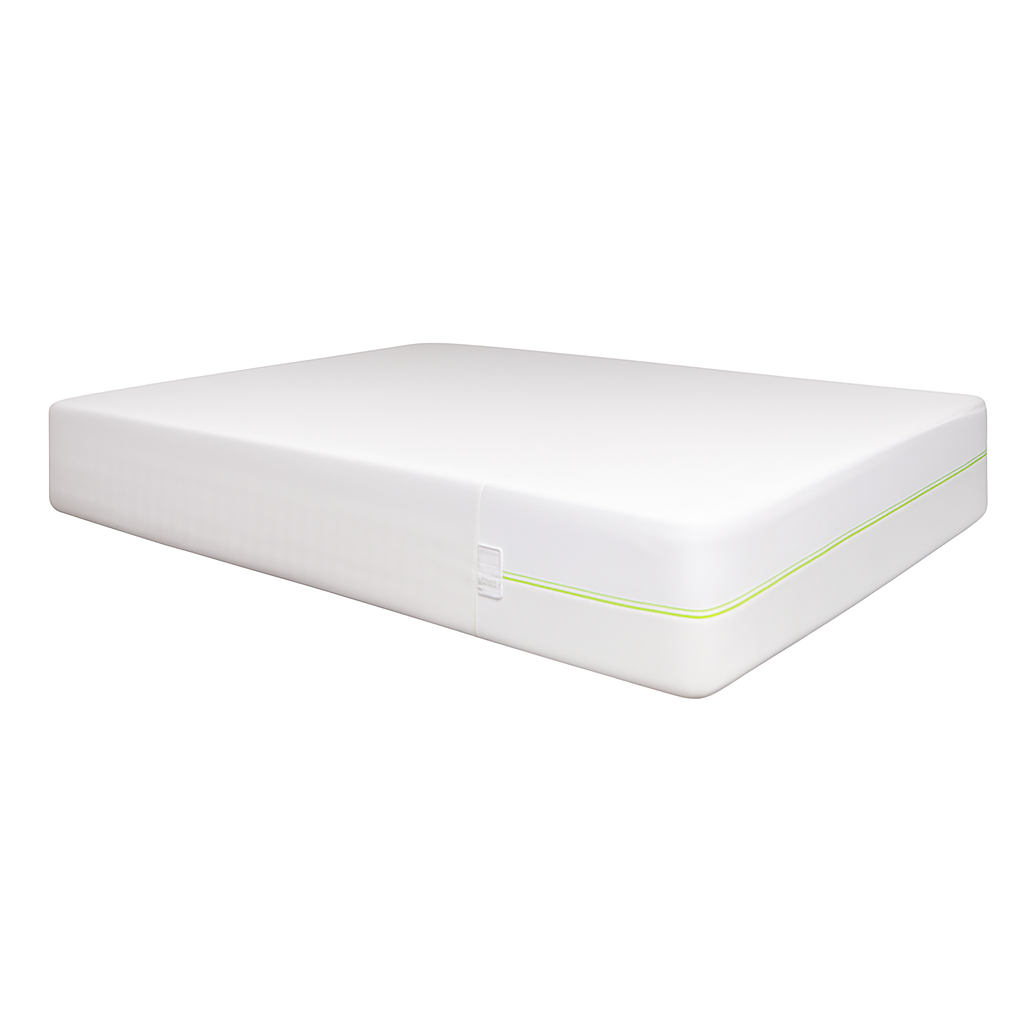
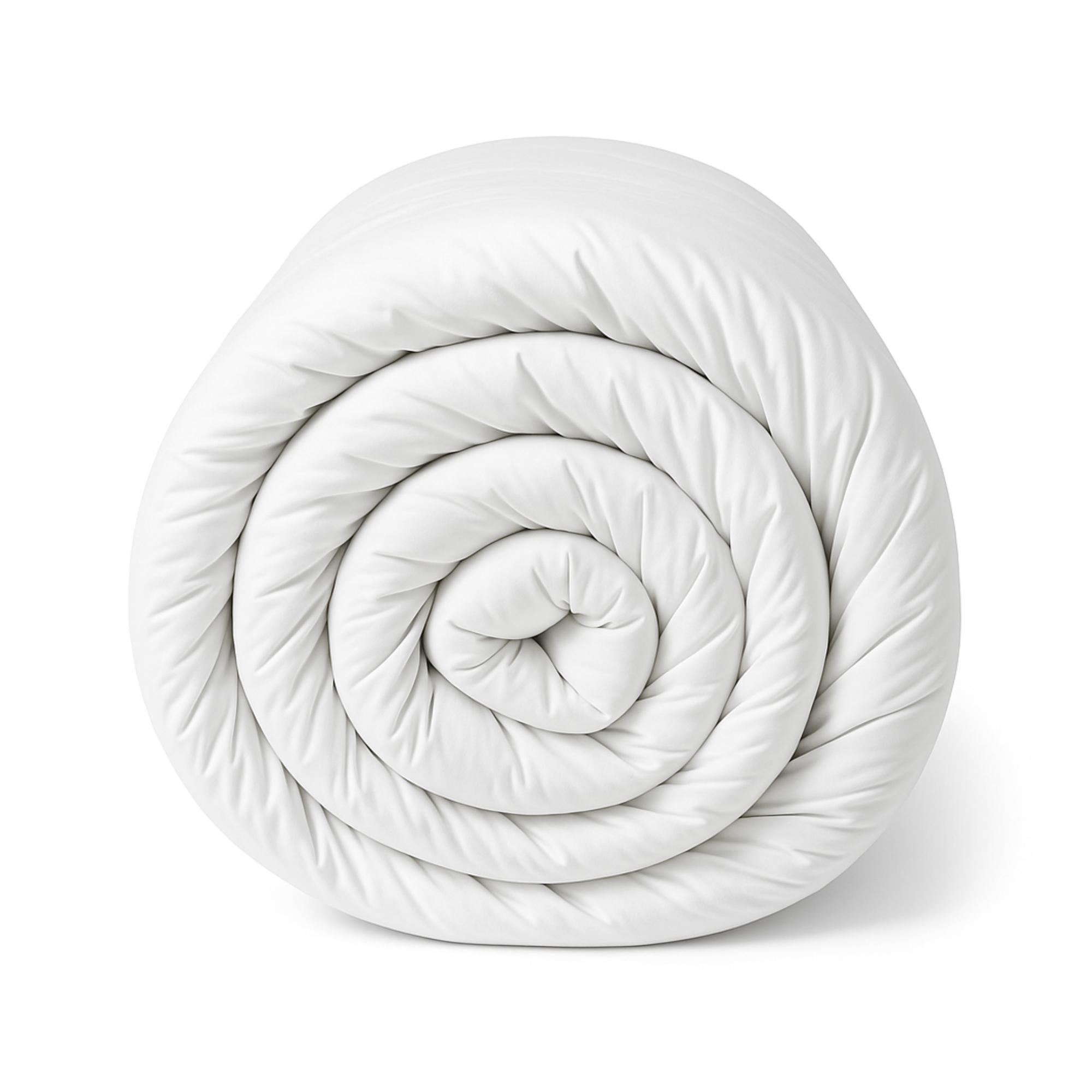
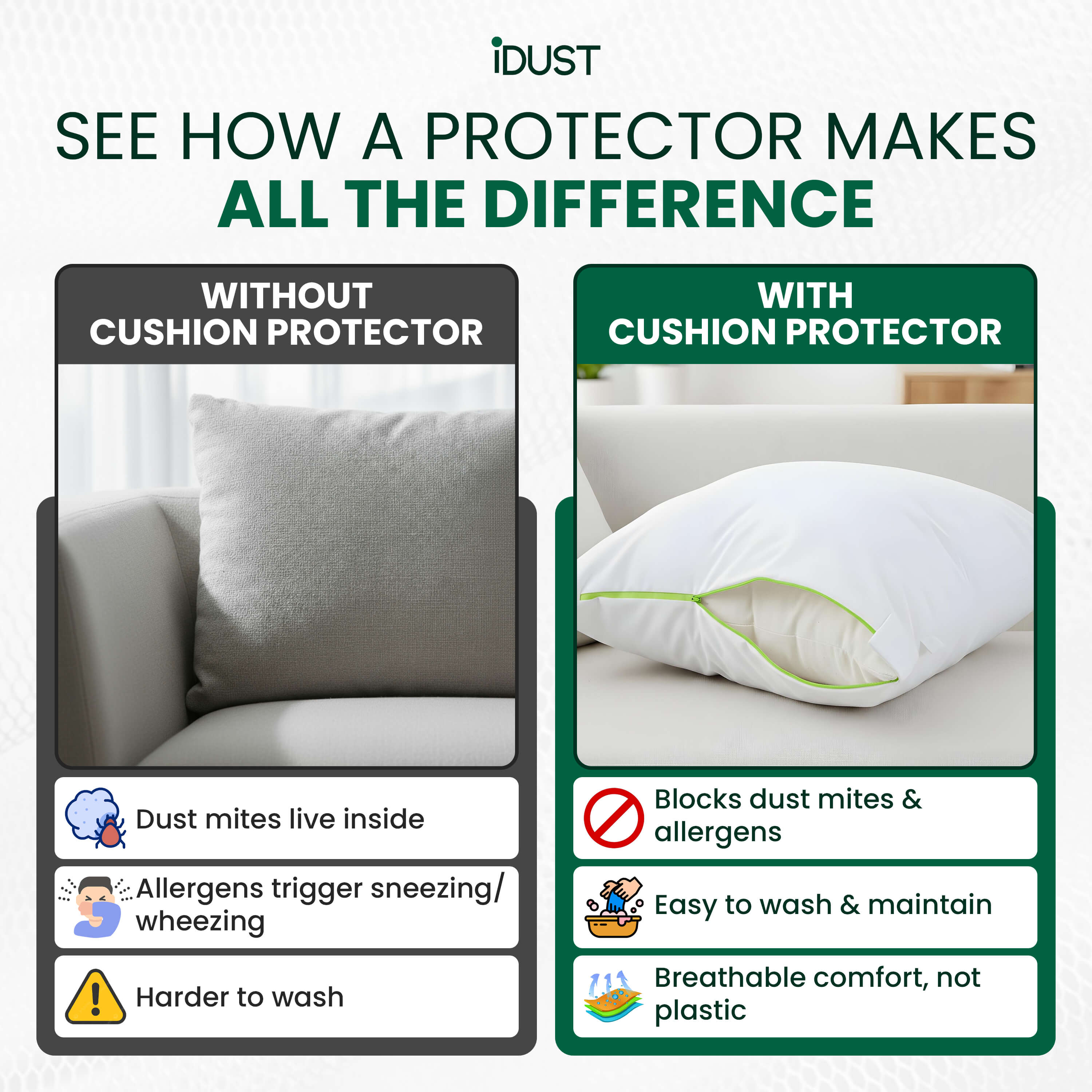
This is the most effective dust mite removal method there is. You enclose your mattress, pillows and duvet in fully zipped, tightly woven barrier covers that completely encase each item on all sides. This traps every existing mite inside, cuts off the fresh skin they feed on, and blocks 100% of dust mite allergen from reaching you. It is Allergy UK's first-line advice, and once a mattress is properly encased there is no need to vacuum it any more.
2. Control the humidity
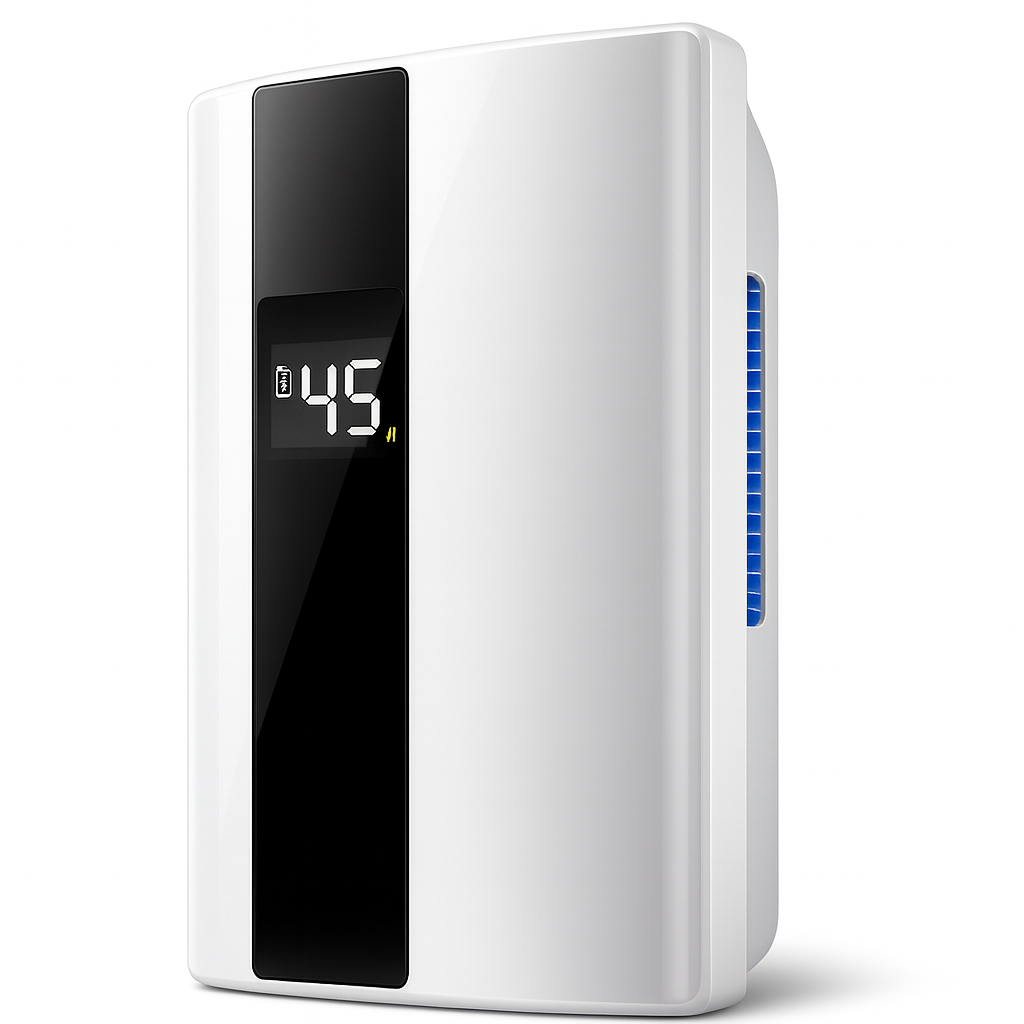
Dust mites cannot survive in dry air. Keeping your bedroom below 50% humidity with a dehumidifier, ideally running most of the day, and checking it with a humidity monitor, is one of the most powerful long-term measures you can take. It quietly kills off the population over time.
3. Wash the bedding that sits on top
Any bedding that is not encased, such as your sheets and pillowcases, should be washed weekly. Washing at 60°C or above kills dust mites, according to Allergy UK. Lower temperatures only rinse the allergen away for a while and leave the mites alive to breed again.
4. Remove their other hiding places
Once the bed is handled, reduce the fabric surfaces elsewhere. Hard flooring and a hard bed frame give mites far fewer places to colonise than a divan and carpet. A HEPA vacuum removes allergens without firing them back into the air, and a HEPA air purifier captures what is already airborne.
The priority order at a glance
-
Encase the mattress, all six sides. The single most important step.
-
Add a dehumidifier and keep the room under 50% humidity.
-
Wash uncased bedding at 60°C weekly, or encase the duvet and pillows too.
-
Switch to a hard bed frame and hard flooring where you can.
-
Support it with a HEPA vacuum, air purifier and spray.
Where to Start
If you do only one thing, seal the bed. The mattress protector is the foundation everything else builds on, and the Complete Dust Mite Protector Set is the fastest route to it, sealing your mattress, pillows and duvet in one go so every surface your skin touches at night is covered from the first night you fit it.
Most people notice the difference quickly: less scratching, calmer skin, clearer mornings, deeper sleep. That is the whole point. Not managing the allergy forever, but taking the trigger out of your bed so your skin can finally settle.
Ready to stop the itch at the source? Shop the Complete Dust Mite Protector Set and seal your bed tonight.
Still not sure what you need for your mattress size or setup? Our founder personally offers a free home consultation to talk it through. It genuinely helps to speak to a real person who lives and breathes this.