


Itchy at 3am and suddenly an expert on bed bugs? 🕵️ Let's crack the case.
You wake up itchy. Maybe there are red marks on your arms, maybe there's just a rash and a blocked nose. The first fear is bed bugs. The more common answer, for most people we speak to, is dust mites.
The two are easy to mix up because both live in your bed and both can leave your skin itching. But they cause it in completely different ways, and the fix for one does nothing for the other. This guide shows you how to tell them apart in about a minute, where on your body each one usually shows, and exactly what to do next.
The short answer
Dust mites don't bite. Bite marks in a line or small cluster point to bed bugs. An itchy rash with no bite point, plus sneezing or a blocked nose that's worst when you wake, points to a dust mite allergy.
In this guide
🔍 The 60 second check: who's the culprit?
Dust mites don't bite. If you can see bite marks in a line or a small cluster, it isn't dust mites.
Raised bite marks in a line or small cluster on arms, legs, neck or face
Likely bed bugsTiny dark spots or blood smears on sheets or mattress seams
Likely bed bugsItchy rash or dry patches with no bite point, plus sneezing or a blocked nose that's worst when you wake
Likely dust mite allergyNo marks at all, just itching, puffy eyes or a runny nose in bed
Likely dust mite allergySeeing bite marks? Compare them with our bed bug bites guide or use the 10 minute bed bug check.
01Meet the suspects
The Core Difference: Two Very Different Pests
Both are tiny and both live in beds, but they feed differently, hide differently and affect you differently.
| Feature | Dust Mites | Bed Bugs |
| Size | Microscopic, about a quarter of a millimetre. You can't see them. | Adults 5 to 7mm, about the size of an apple seed. You can see them. |
| Food | Flakes of dead skin | Human blood |
| Do they bite? | No. The itch is an allergic reaction to their droppings. | Yes, usually at night while you sleep |
| What you notice | Itchy skin or eczema flares, sneezing, blocked nose, itchy eyes, worst in bed or on waking | Itchy bite marks, often in lines or clusters, plus dark spots on the bedding |
| Where they live | Inside mattresses, pillows, duvets, carpets and sofas | In mattress seams, bed frames, headboards and cracks near the bed |
Suspect file #1
Dust Mites: The Invisible Cause
Dust mites are microscopic relatives of spiders and ticks. They are not parasites and they never feed on you. They eat the tiny flakes of skin we all shed every night, which is why your mattress, pillows and duvet hold far more of them than anywhere else in the house. The problem isn't the mites themselves but the proteins in their droppings. Breathe them in or lie on them for eight hours, and an allergic body reacts with itching, sneezing and a blocked nose.
Calling card: an itchy rash and a stuffy nose, but no bite marks.
Suspect file #2
Bed Bugs: The Visible Biters
Bed bugs are true parasites. They are flat, reddish-brown insects that feed on human blood, usually at night, then hide in the seams of the mattress, the bed frame or nearby furniture during the day. See what bed bugs look like at every life stage.
Calling card: itchy bumps in a row or a cluster, plus tiny dark spots on the sheets.
Sounds like dust mites, not bed bugs?
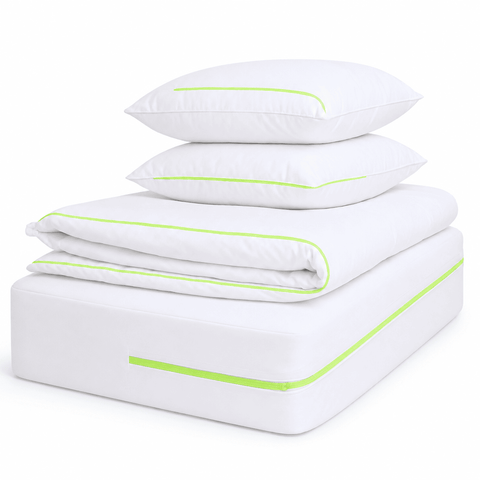
The fix is sealing your bed. A six-sided zipped encasement blocks 100% of dust mites at the source.
See the Mattress Protector → Protect pillows and duvet too →02Follow the marks
Dust Mite Rash vs Bed Bug Bites: Where on the Body
Where the marks are, and what they look like, is often the quickest way to tell the two apart.

A dust mite rash usually shows where your skin touches the bed for hours:
- Face, cheeks and around the eyes (from the pillow)
- Neck, chest and arms
- Skin creases like the inside of the elbows and behind the knees, where eczema tends to flare
- It looks like dry, red, itchy patches or a general itch, not separate bites with a centre point
Bed bug bites usually show on skin left uncovered while you sleep:
- Arms, hands, shoulders, neck, face and legs
- Small raised red bumps, often three or four in a line or a tight cluster
- They can take a day or more to appear, and some people don't react at all
64%
Our own numbers back this up. In the iDustMite allergy quiz, 64% of 119 people with dust mite symptoms said itchy skin or rashes were one of their symptoms, and the most common worst time was first thing in the morning, after a night lying on the mattress. Bed bug bites don't follow that morning pattern in the same way, and they rarely come with sneezing or a blocked nose.
If you've been told you have "dust mite bites", read the truth about dust mite bites. The marks are real, but they aren't bites.
Did you know? Bed bug bites that line up in a row of three are so common they have a nickname: "breakfast, lunch and dinner".
03Gather the evidence
Spotting the Culprit: What to Look For
Signs of Dust Mites: It's All About the Reaction


You will never see a dust mite. What you notice is your body's allergic reaction:
No bites: Dust mites do not bite. Any clear bite mark is from something else.
Allergy symptoms: Sneezing, a runny or blocked nose, itchy or puffy eyes, an itchy throat or a cough, usually worst in bed or when you wake up.
Dust mite rash: General itching at night, dry red patches or eczema flare-ups. These are allergic skin reactions, not bite marks.
No visible evidence: No blood spots, no shed skins, no bugs. The only evidence is how you feel.
Worse in the bedroom: Symptoms that ease when you're away from home and come back when you sleep in your own bed point strongly to dust mites.
🙅 Myth vs fact
MYTH"Dust mites are biting me at night."
FACTThey can't bite. The itch is your body reacting to their droppings.
MYTH"Bed bugs only turn up in dirty homes."
FACTThey hitch a ride in luggage, clothes and second-hand furniture, so spotless homes get them too.
Signs of Bed Bugs: Evidence You Can See

Bed bugs leave clues you can find with a torch:
Bites: Red, itchy bumps, often in lines or clusters, on skin that was uncovered while you slept.
Spots and stains: Tiny dark spots (their droppings) or small blood smears on sheets, mattress seams and the bed frame.
The bugs themselves: Adults are 5 to 7mm, flat and reddish-brown. You may also find pale shed skins in the seams. Some heavy infestations have a sweet, musty odour.
For a step by step check, follow our guide to the signs of bed bugs. Bed bugs usually hide within about 3 to 6 metres of where you sleep.
04Case closed: now what?
Your Action Plan: What to Do Next
Once you know which one you're dealing with, the plan is completely different.
If It's Dust Mites: Fix the Bed First

You can't remove every dust mite from a home, but you can cut your exposure where it matters most: the eight hours you spend in bed. This is the order iDustMite founder Richard Williams, a former NHS worker, gives after more than 1,000 dust mite consultations:
⭐ BIGGEST WIN
Seal the mattress on all six sides. A zipped encasement blocks 100% of dust mites and their droppings, so you're no longer lying on years of build-up.
Keep bedroom humidity under 50%. Dust mites need damp air to survive. A dehumidifier and good ventilation make the room hostile to them.
Deal with pillows and duvet. Either wash bedding at 60°C every week or seal your pillows and duvet in protectors too.
Choose hard surfaces near the bed. A hard bed frame and hard flooring hold far fewer mites than upholstered headboards and carpet.
Add the extras. A HEPA vacuum, a dust mite spray and an air purifier help, but only once steps 1 to 4 are in place.
For the full plan, read how to get rid of dust mites in your bed or our guide to preventing dust mites in your home.
Did you know? Dust mites never drink. They soak up moisture from the air, which is why keeping your bedroom under 50% humidity hits them so hard.

If It's Bed Bugs: Act Quickly
Bed bugs won't go away on their own, and the earlier you act the easier they are to clear:
Get professional help. Contact your local council or a pest controller. Heat treatment and targeted insecticides work far better than sprays from the shop.
Wash and dry on hot. Wash bedding and clothes from the bedroom at 60°C, then tumble dry on high.
Encase the mattress. A bed bug proof encasement traps any bugs inside and leaves them nowhere to hide in the seams.
Follow the full 8 step plan to get rid of bed bugs in the UK.
Confirmed it's bed bugs?
Seal your mattress in a bed bug proof encasement so any bugs left inside are trapped and no new ones can get in.
See the Bed Bug Proof Encasement →05Your questions, answered
Dust Mites vs Bed Bugs: Quick Answers
Tap a question to see the answer.
Do dust mites bite?
No. Dust mites have no way to bite or pierce skin. The itch and rash come from an allergic reaction to their droppings.
Can you have dust mites and bed bugs at the same time?
Yes. Every bed has dust mites, so someone with bed bugs can still react to dust mites too. If you have bite marks and morning sneezing, deal with the bed bugs first, then seal the bed.
Does a mattress encasement help with both?
A fully zipped, six-sided encasement blocks dust mites and their droppings, and it also stops bed bugs living in the mattress seams. It won't clear bed bugs from the rest of the room, so you still need professional treatment for those.
How do I know it isn't something else?
Carpet beetle larvae, fleas and scabies can all cause itchy marks too. If neither dust mites nor bed bugs fit, see carpet beetle vs bed bug or speak to your GP or pharmacist.
Our Bed Bug Guides
If you think it is bed bugs, these step by step guides will help:
Still not sure who the culprit is?
Call us on 020 3048 2522 and we'll help you work it out.
Wishing You A Dust Mite Free Day!


0 comments