Bed bugs in 30 seconds: small, flat, reddish brown insects (5 to 7mm) that hide in mattress seams and bed frames and feed on blood at night. They arrive in luggage and second hand furniture, not because a home is dirty. They do not spread disease in the UK, but they are hard to get rid of because eggs hatch for weeks after treatment and adults survive months without a meal. The plan that works: confirm the signs, hot wash, vacuum, seal the mattress, treat the room if needed, and keep checking for 8 weeks.
Start here: what do you need right now?
 Do I have bed bugs?7 signs, a 10 minute mattress check and a free likelihood checker.
 What do bed bugs look like?Eggs, nymphs and adults at real size, plus lookalikes. Free identifier.
 Bed bug eggsWhat they look like, where they hide and what kills them. Free egg checker.
 Bed bug bitesWhat they look like and a 5 question what is biting me quiz.
 How to get rid of bed bugsThe 8 step UK plan, with a personalised plan tool.
 What kills bed bugs instantly?Heat, steam, sprays and home remedies compared, with a method finder.
 Best mattress encasement for bed bugsThe 7 tests before you buy, with a checker and size finder.
 Protector vs cover vs encasementWhich one actually stops bed bugs, and a checker for the cover you own.
 Bed bugs in a child's bed or cotA calm, child-safe plan for parents with a step by step checklist.
 Pillows, duvets and bed framesWhere else they hide on the bed, with a free bed audit.
 How long do bed bugs live?Without food, in an empty house, and in sofas, clothes and cars.
 Treatment costs UKHeat vs insecticide vs DIY, with a cost calculator.
 Hotels and travelA 5 minute room check and an interactive travel checklist.
 Carpet beetle vs bed bugThe most common lookalike, side by side.
 Itchy but no bed bugs?6 tiny bugs and 1 allergy it could be instead.
The bed bug plan on one page
- Confirm it. Look for dark dots, rusty spots, shed skins and eggs in mattress seams before spending money.
- Stay put. Sleeping elsewhere spreads them. Do not use bug bombs.
- Hot wash and dry all bedding and nearby clothes at 60°C, then 30 minutes in a hot dryer.
- Vacuum seams, base, headboard and floor edges; empty it outside.
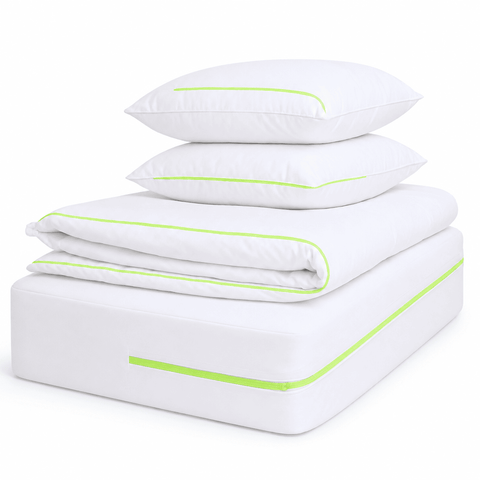
- Seal the mattress in a full-zip, six-sided encasement and leave it on for 12 months.
- Deal with pillows, duvet and bed base. Encase or hot wash; consider replacing a divan.
- Call a professional if bites continue after 2 weeks or bugs are in other rooms.
- Check weekly for 8 weeks.

Protect the bed first
Every guide above ends in the same place: seal the mattress so bugs cannot live in it. Full zip, all 6 sides, free next-day UK delivery on orders over £149.
Shop the bed bug encasement Protect the whole bedRW
Written by Richard Williams, founder of iDustMite, former NHS worker, guest speaker at the Allergy UK Show in 2025 and 2026, and adviser on over 1,000 one-to-one bedroom consultations. Reviewed October 2026.